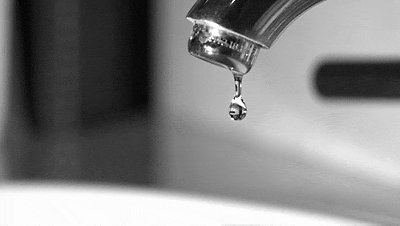
That steady drip from your kitchen or bathroom faucet is more than an annoyance. It signals that something inside the faucet body has failed.
Understanding what causes dripping faucets helps you decide whether to grab basic tools or call a professional plumber. This guide walks through the most common causes, how to identify them, and when repair or replacement makes the most sense for your Southern Maryland home.
A drip occurs when internal components fail to create a watertight seal after the handle is turned to the “off” position. When working correctly, parts inside the faucet press together to block the water supply line completely. Water should stop at the valve seat or cartridge inside the faucet body.
Over time, wear, mineral buildup, or pressure issues allow small amounts of water to sneak through. You might turn the faucet handle firmly to “off,” yet still see a drop fall from the faucet spout every few seconds. This signals a sealing problem inside that needs attention.
Identifying exactly where the drip appears provides the first diagnostic clue:
Drip Location | Likely Problem Area |
|---|---|
From the spout | Valve seat, washer, or cartridge |
Around the handle base | O-ring or stem seal |
Under the sink | Supply line connection or shutoff valves |
Ideal shutoff: Internal parts press tight, blocking all water flow. No dripping water reaches the spout.
Failed shutoff: Worn or damaged parts leave gaps. Water pressure pushes drops through, creating that familiar drip pattern.
Most faucet drips come from worn or damaged internal parts that cost far less to fix than water damage or inflated bills. Faucets in busy kitchens and bathrooms across Southern Maryland cycle thousands of times per year, slowly wearing out these components.
The following subsections cover O-rings, washers, valve seats, cartridges, and seals separately so you can match symptoms to likely causes.
O-rings are small rubber rings that seal around moving parts like the valve stem or the base of the spout. They prevent leaks at the faucet handle area rather than the spout itself.
Traditional compression faucets use rubber washers that press against the valve seat. Over years of friction, washers flatten, crack, or deform and start allowing drips.
The valve seat is the metal surface inside the faucet body where a washer or cartridge presses to stop water flow. The valve seat connects directly to the spout, making it critical for a tight seal.
Many modern bathroom and kitchen faucets in Maryland homes are cartridge style, with either one lever or two handles controlling a removable valve cartridge. Inside the cartridge are seals and openings that direct and mix hot water and cold water.
Ball faucets and ceramic disc faucets use internal rubber seals and springs or disc assemblies instead of traditional washers. These designs are common in updated kitchens and bathrooms.
Not every drip comes from broken parts inside the faucet. Sometimes high or unstable water pressure in your home is to blame. In neighborhoods near Hollywood, MD and Annapolis, pressure can fluctuate based on public water supply or well pump settings, stressing faucet seals over time.
If more than one faucet in your house drips, or if drips come and go at certain times of day, suspect a pressure issue or deeper plumbing problem.
Typical residential water pressure should fall in the 45 to 60 PSI range. Pressures consistently above 70 to 80 PSI can force water past otherwise good faucet seals.
Sometimes a leaking faucet is simply the first visible sign of a deeper issue like partially blocked pipes, deteriorating supply lines, or failing shutoff valves.
Understanding your faucet type helps narrow down the most likely cause of a drip. The four main residential faucet designs found in homes built or remodeled between the 1980s and 2020s are cartridge, ceramic disc, ball, and compression washer faucets.
Cartridge faucets have either one lever or two handles with smooth, easy motion that does not require tightening down hard to stop water.
These faucets typically have a single lever mounted on a wide, cylindrical body with quarter-turn on and off motion.
Ball faucets are single-handle fixtures with a rounded cap behind the handle. Moving the handle up and down controls flow while side to side controls temperature.
Compression faucets are the oldest common style, usually with two handles that you twist firmly to shut off hot water and cold water separately.
The cost of ignoring a drip often exceeds the cost of repairing it. National studies estimate a single dripping faucet can waste thousands of gallons of water per year, and households in Maryland pay for every gallon delivered, whether used intentionally or not.
Beyond wasted water, long-term drips damage cabinets, countertops, flooring, and even structural framing under sinks.
A faucet dripping at roughly one drop per second can waste over 3,000 gallons of water per year, based on EPA estimates. That small drip becomes costly repairs to your water bill.
Drips at the base of the faucet or from supply connections under the sink soak cabinetry, drywall, or flooring, especially when unnoticed for weeks.
Many homeowners are comfortable changing simple parts like washers or O-rings, while others prefer to call a professional plumber from the start. The right choice depends on faucet type, fixture age, leak location, and your comfort with shutting off water and disassembling fixtures.
Boothe’s can step in at any point, whether you want a diagnosis before attempting DIY or need help after a repair attempt fails.
Confident homeowners with basic tools like screwdrivers, an adjustable wrench, and Allen keys can often replace simple parts such as a worn washer, O-ring, or straightforward cartridge.
Call a professional plumber if the faucet is very old, heavily corroded, has a stuck brass valve stem, or has had several failed repair attempts. Also call if multiple fixtures drip, your home’s water pressure seems unusually strong, or you see moisture under cabinets or behind walls.
These questions address related concerns about dripping faucets beyond the main causes discussed above. Answers are tailored to typical conditions for homeowners in Southern Maryland.
While a drip is rarely a same hour emergency, plan to address it within a few days to a couple of weeks to avoid wasted water and hidden damage. If the drip worsens quickly, is accompanied by damp cabinets, or affects hot water availability, call a plumber as soon as possible. Do not wait months since small leaks tend to become more expensive over time due to incorrect installation of temporary fixes or continued deterioration.
In most cases, it is safe to keep using the sink for normal tasks. However, the drip should still be fixed to prevent water waste and wear on faucet parts. If water is pooling under the sink, you notice signs of mold, or electrical outlets nearby could get wet, avoid using that fixture until inspected. Placing a small container under a slow drip is a temporary measure, not a long term solution.
Most dripping faucets come from faucet level issues, but some hot side leaks can indicate excessive pressure or temperature settings on the water heater. If only hot water taps drip or spit when first turned on, or if the temperature and pressure relief valve on your water heater is seeping, have a professional check the system. This is especially important in homes where the heater is more than 10 years old.
In areas with hard water, a softener or filtration system can reduce mineral buildup inside faucets and valve seats, extending the life of parts. While softening water does not prevent all leaks, it slows corrosion and scaling that lead to washer, cartridge, and valve seat corrosion issues. Discuss water hardness levels and treatment options with a local plumber who understands Southern Maryland water conditions.
Consider the faucet’s age, frequency of past repairs, availability of replacement parts, visible corrosion, and whether the finish or style still fits your home. Builder grade faucets older than 10 to 15 years, or fixtures with peeling finish and deep corrosion, are often cheaper to replace than repair repeatedly. Have a plumber from Boothe’s inspect the faucet and provide cost comparisons between repairing the current fixture and installing a new faucet. This is often a straightforward fix that prevents future headaches and costly repairs.